Medical Device Manufacturing Insights & Blog
Industry updates, engineering leadership, and vertical integration strategies from MedTech contract manufacturing experts.
Why Are Bioelectronic Pain Management Devices in Demand?
Table of Contents
Why Are Bioelectronic Pain Management Devices in Demand?
A person with chronic pain may plan each day around a flare: the stairs, a long drive, or simply getting through work. For many, medication alone does not provide enough relief, while side effects can complicate daily routines. This is one reason interest in Bioelectronic Pain Management Devices is growing. These technologies use electrical stimulation to influence nerve activity. Options include external TENS units and implanted spinal cord or peripheral nerve stimulators. They are not interchangeable, and suitability depends on the patient, diagnosis, and clinical assessment.
Bioelectronic medicine researcher Dr. Kevin J. Tracey has helped shape this field. A useful summary of his research is that targeted nerve signals may influence bodily processes; this is a paraphrase, not a verbatim quotation. Applied to pain care, the idea is practical but not magical: a clinician programs a device, then evaluates whether stimulation improves symptoms and function. Some patients may benefit. Others may not. Device trials, follow-up visits, programming adjustments, and possible procedural risks deserve attention alongside potential relief. Evidence and outcomes also vary by device and condition. That matters.
Demand reflects a search for more personalized, non-drug treatment options, not proof that devices work for everyone or replace other care. Patients should ask what benefit is realistic, how success will be measured, and what happens if stimulation falls short. This field is promising, yet the honest answer can be uncertain.
What Are Bioelectronic Pain Management Devices?
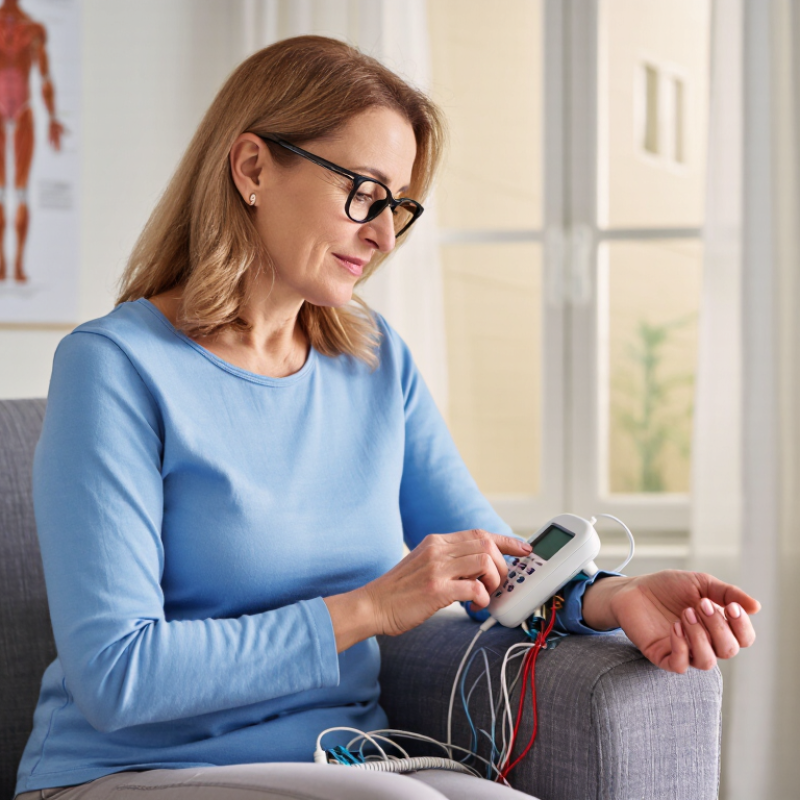
Bioelectronic pain management devices use electrical impulses to influence nerve activity involved in pain signaling. They include external transcutaneous electrical nerve stimulation (TENS) units, as well as implanted spinal cord and peripheral nerve stimulators. TENS pads may sit on the skin near a painful area; implanted systems deliver pulses through electrodes placed near targeted nerves. The sensation can feel like a mild tapping or tingling. Not a cure.
Settings, electrode placement, and treatment goals vary by device and person. Some devices aim to reduce pain signals reaching the brain; others may support the body’s own pain-modulating pathways. They do not repair every underlying cause, and results can be uneven. That limitation matters. The CDC’s 2023 National Health Interview Survey found that 24.3% of U.S. adults reported chronic pain, while 8.5% reported high-impact chronic pain. Grand View Research estimated the global neuromodulation devices market at about US$6.7 billion in 2023, reflecting growing interest in electrical therapies, though the category includes uses beyond pain. These figures describe need and market activity, not proof that a particular device will work for an individual. A qualified clinician can assess suitability, risks, and realistic treatment goals.
How Do Bioelectronic Devices Modulate Pain Signals?
Bioelectronic devices influence how the nervous system processes pain by delivering controlled electrical pulses. Some stimulate nerves through electrodes placed on the skin; others use implanted electrodes near specific nerves or the spinal cord. The approach depends on the device and the person’s condition. The aim is not to erase every sensation.
A surface device may send mild pulses through sticky pads, often placed near the painful area. These pulses can activate sensory nerve fibers and change how pain messages travel toward the brain. In simplified terms, competing signals may make pain less prominent. The signal changes. Spinal cord stimulation works differently, using carefully adjusted pulses to alter activity in pathways involved in pain. Newer systems may produce sensations that are less noticeable, though experiences vary.
These devices do not usually repair the source of pain, and relief is not guaranteed. Some people notice a meaningful difference; others find the effect limited or temporary. That explanation is useful, but incomplete: pain also involves sleep, mood, inflammation, and daily movement. Clinicians typically assess a person’s symptoms and medical history before choosing a device or adjusting its settings. Precise placement matters. So does follow-up, because comfort and effectiveness can shift over time.
Which Factors Are Driving Demand for These Devices?
Demand is rising as more people seek ways to manage persistent pain without relying only on medication. Chronic back pain, nerve pain, and post-surgical discomfort can disrupt sleep, work, and ordinary tasks such as climbing stairs. These effects make treatment options that fit daily routines appealing.
Bioelectronic devices use electrical stimulation to influence pain signaling, though designs and clinical uses differ. Some are worn under clothing, while implanted systems require specialist assessment and follow-up. A small wearable may be easier to use during a commute or at home. That matters. Interest is also fueled by attention to non-drug approaches, concerns about medication side effects, and demand for more individualized care. The field is promising, but the story is not tidy.
Device appeal is not proof of benefit for every person. Responses vary, and stimulation can cause discomfort or skin irritation; implanted options bring procedural risks. Evidence differs by device and condition, so clinical guidance remains important. Cost, insurance coverage, charging needs, and fitting appointments can limit access. A patient may still need medication, movement therapy, or other support.
Why Are Bioelectronic Pain Management Devices in Demand?
Chronic pain burden and population aging are important factors behind demand for non-drug pain management options.
In 2021, 20.9% of U.S. adults experienced chronic pain and 6.9% experienced high-impact chronic pain, which substantially limits daily activities. Globally, people aged 65 and older made up 10% of the population in 2022; this share is projected to reach 16% by 2050. These trends contribute to interest in options such as bioelectronic devices, which may provide non-drug pain relief. The figures describe different populations and measures, so they are not directly comparable.
Sources: U.S. Centers for Disease Control and Prevention, 2021 chronic pain estimates; United Nations, World Population Prospects 2022.
What Benefits Do They Offer Compared With Traditional Treatments?
Bioelectronic pain-management devices use electrical signals to influence how pain messages travel through the nervous system. External units may use adhesive pads on the skin; implanted systems require specialist assessment. Unlike many pain medicines, these devices generally do not expose the whole body to a drug, which may help people concerned about medication side effects. Some users also value being able to adjust stimulation during daily activities.
Traditional treatments, including medicines and physical therapy, remain useful and may work well alongside a device. Stimulation can offer a non-drug option, and certain external devices are reversible and used at home. Still, results vary by condition and person. Relief may be partial. Skin irritation can occur, while implanted devices involve procedures and follow-up care. Evidence also differs across device types, so a clinician should help weigh likely benefits, risks, and alternatives. The settings can take patience to learn; that part is not always intuitive.
Tips: Track pain, activity, and settings in a simple daily note. Ask a qualified clinician how to place the electrodes safely, and follow the device instructions. Stop and seek advice if stimulation causes unexpected discomfort.
What Challenges Affect Their Adoption and Use?
Bioelectronic pain management devices may appeal to people seeking options beyond medication. Yet demand does not guarantee easy adoption. These devices use electrical signals to influence nerve activity, and results can vary by person, condition, and device type. Some users may notice meaningful relief; others may see little change. That uncertainty matters. Pain is complex, and a device is not a universal solution.
Practical barriers can shape everyday use. A device may need careful placement, regular charging, or repeated adjustments. Adhesive pads can irritate sensitive skin, while wires or bulky components may interfere with sleep or movement. People also need clear instructions and access to trained clinicians. Costs and insurance coverage can differ, making ongoing use difficult. Evidence quality and follow-up care matter, too; promising results do not always tell us who will benefit most. That gap is easy to underestimate.
Tips: Ask a qualified clinician whether the device suits your diagnosis and health history. Request a hands-on demonstration, and check how often settings or pads need attention. Keep a simple log of pain, sleep, and side effects. Stop and seek medical advice if use causes unexpected symptoms. Be realistic: tracking progress helps, but it cannot guarantee relief.
FAQS
They send controlled electrical pulses that can change how pain messages travel toward the brain. They do not erase every sensation.
Sticky pads are placed on the skin, often near the painful area. Mild pulses activate sensory nerve fibers. Placement matters.
Implanted electrodes deliver adjusted pulses near the spinal cord to influence pain pathways. Specialist care and follow-up are needed.
No. Some people report meaningful relief, while others notice little or temporary change. Pain is complicated.
They can provide a non-drug option and generally do not expose the whole body to a drug. Some external devices can be used at home.
Surface stimulation may irritate the skin or feel uncomfortable. Implanted systems involve procedures and ongoing follow-up.
Not necessarily. Medication, movement therapy, or other support may still help. A clinician can discuss suitable options.
Keep a simple daily note of pain, activity, and device settings. Ask a qualified clinician about safe electrode placement, and seek advice for unexpected discomfort.
Conclusion
Bioelectronic Pain Management Devices use electrical or other controlled signals to influence the nerves and pathways involved in pain. Depending on the device, stimulation may help interrupt, reduce, or reshape pain signals before they are perceived. Interest in these technologies is growing as more people seek options for persistent pain and as patients and clinicians look for approaches that can complement medication or reduce reliance on it.
Compared with traditional treatments, bioelectronic devices may offer targeted, adjustable pain relief without the same systemic effects associated with some medicines. They can also be tailored to an individual’s needs, though results vary. Adoption may be affected by device cost, access to trained clinicians, the need for fitting or follow-up, and differences in how people respond. Clear evidence, practical guidance, and thoughtful patient selection will be important to help users understand both the potential benefits and limitations.

Blog Tags: