Knowledge & Innovation

Medical Device Manufacturing Insights & Blog

Industry updates, engineering leadership, and vertical integration strategies from MedTech contract manufacturing experts.

0%

Bioprocessing Containment Systems are not just barriers around a process. They shape how operators handle powders, connect single-use assemblies, and transfer materials between rooms. In 2026, selection means matching containment performance to the product, process steps, cleaning strategy, and facility layout. A glove port may look simple. Its reach, visibility, and position can decide whether routine work feels controlled or awkward.

Dr. Tim Sandle, a pharmaceutical microbiologist whose work includes contamination control, offers relevant expertise. However, no source text was provided to verify a verbatim quotation from him, so attributing invented words would be unreliable. His published focus makes a useful point for this decision: containment belongs within a broader, risk-based contamination-control approach. That is a paraphrase, not a direct quote.

The practical assessment starts with real tasks. Watch an operator weigh material, seal a transfer bag, or clear a jam. Note where hands reach and where connections break. Then compare containment options against measurable needs, including airflow, ergonomics, maintenance, and integration with existing equipment. A specification sheet cannot reveal every snag. Nor does the most complex system automatically offer the best fit. Sometimes the weak point is a small transfer step that the design team barely noticed. This guide examines how to ask better questions, assess trade-offs, and choose a system that supports both protection and dependable daily operation.
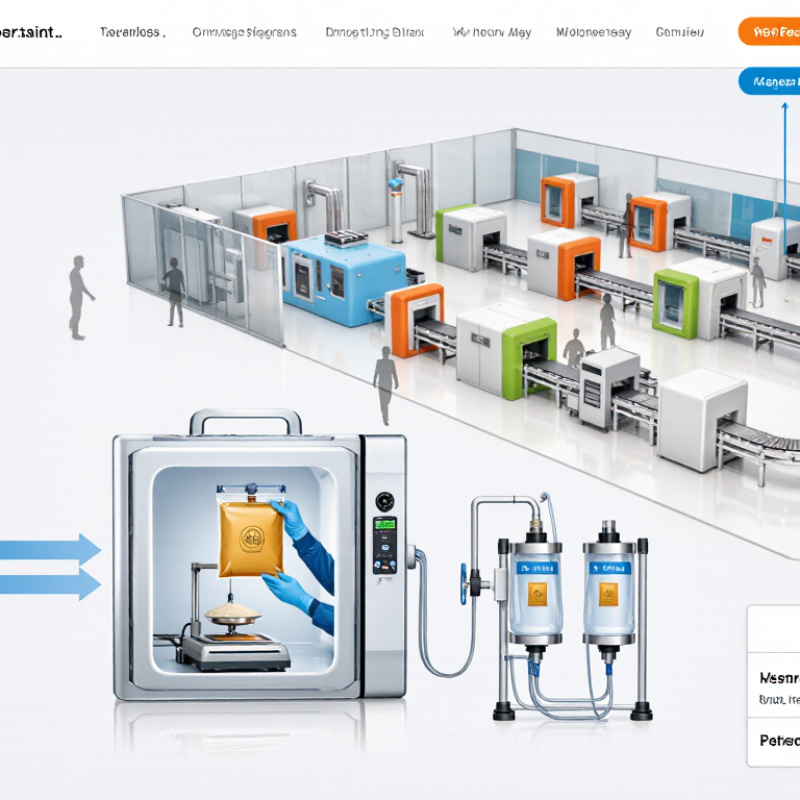
How to Choose Bioprocessing Containment Systems in 2026

Bioprocessing Containment Systems: Scope and Core Functions

Bioprocessing containment systems cover the equipment and practices that keep process materials within defined boundaries. Their scope may begin when media, buffers, or cell cultures enter a suite. It can extend through sampling, transfers, harvest, and waste handling. The boundary is not always a rigid enclosure. Closed tubing, secure connectors, sealed bags, and room controls may work together.

Small leaks count.

Containment has two related aims: protecting the process from unwanted exposure and limiting personnel or environmental contact with process materials. These aims can require different controls. An aseptic transfer connection may protect product quality, while a closed vessel and suitable exhaust management address material escape. No single component does everything. The full process path matters.

Core functions include maintaining a closed boundary, enabling controlled access, and supporting safe movement of materials. Useful features may include glove ports, sampling valves, pressure monitoring, alarms, and clear procedures for changing bags or tubing. Design should also account for cleaning, maintenance, and operator reach.

A risk assessment can look complete on paper yet miss a rushed connection change or awkward waste-bag removal. That gap deserves attention. A well-defined system makes those routine steps visible and manageable, rather than treating containment as an equipment label.

Process Hazards, Materials, and Containment Requirements

Containment selection starts with the hazard, not the equipment catalogue. Map each operation: open sampling, powder charging, harvest transfer, and waste handling create different exposure routes. Define the material’s occupational exposure limit or band, biological activity, and likely release form. A liquid leak, dry powder, and aerosolized culture need different controls. Small details matter.

Match the enclosure and transfer design to the credible release scenario. Check glove ports, seals, connectors, and waste paths under actual operating pressure. For product-contact materials, assess chemical compatibility, sterilization effects, extractables, and leachables. BioPlan Associates’ 2024 industry report describes widespread single-use adoption, but adoption alone does not prove containment performance. Request integrity and leak-test evidence for the intended configuration. Room cleanliness is not a substitute: ISO 14644-1:2015 sets a Class 5 limit of 3,520 particles of 0.5 μm or larger per cubic metre, but that measures airborne cleanliness, not escape from process equipment. A practical review should include operators at the transfer point. Their workarounds can reveal gaps that drawings miss. And some assumptions deserve retesting. A system that contains routine production may behave differently during a blocked line or a hurried intervention.

How to Choose Bioprocessing Containment Systems in 2026

Process hazards, materials, and containment requirements

ISO cleanroom classes set limits for airborne particle concentrations; they do not, by themselves, define biological containment. Choose containment based on the process hazard, exposure routes, scale, and material compatibility, then verify that the selected system meets the required performance.

Maximum concentration of particles ≥0.5 μm, per cubic metre. Source: ISO 14644-1.

Containment Technologies and Their Suitable Applications

Containment technology should match the process step, material, and exposure route. Closed single-use assemblies can limit contact during media transfer, sampling, and harvest. They work best when connectors, tubing, and bags are compatible and leak-tested. A small leak can undermine an otherwise closed process.

For powder charging or open manipulations, a ventilated enclosure or isolator may reduce operator exposure. Its usefulness depends on airflow, glove integrity, transfer methods, and the task’s frequency. Aseptic barriers, including restricted-access systems, can help protect product during interventions, but they are not automatically substitutes for robust process design. Fit matters. A poorly placed port can make routine work awkward.

Room-level containment may suit operations with several connected steps or higher exposure concerns. Pressure differentials, exhaust handling, cleanable surfaces, and clear personnel routes all need evaluation. In practice, the best choice often comes from mapping transfers and interventions at the actual equipment, not from a diagram alone. That assessment should include cleaning or disposal, maintenance access, monitoring, and operator training. Some risks remain difficult to predict, especially when processes change. Reassess the system after scale-up, new materials, or repeated deviations.

How to Choose Bioprocessing Containment Systems in 2026 — Containment Technologies and Their Suitable Applications
Containment technology How containment is achieved Suitable applications Key selection considerations Typical limitations
Closed, hard-piped process equipment Process vessels, transfer lines, and associated equipment form a closed boundary that limits release during normal operation. Seed trains, fermentation, cell culture, and other liquid processes where equipment can remain connected through processing. Assess pressure and vacuum conditions, seals, sampling points, drainability, cleaning or sterilization needs, and maintenance access. Leaks can occur at seals, valves, sampling ports, or during maintenance. A closed design does not remove the need for leak detection and safe intervention procedures.
Single-use closed systems Disposable bags, tubing, connectors, and assemblies keep product in a contained fluid path and reduce equipment opening between batches. Media and buffer preparation, cell culture, transfers, sampling, and other liquid operations suited to disposable assemblies. Check connector compatibility, assembly integrity, pressure limits, extractables and leachables requirements, waste handling, and supplier-change controls. Connections and disconnections are potential release points. Film or tubing damage, incorrect assembly, and unsuitable pressure conditions can compromise containment.
Aseptic connectors and contained transfer devices Designed interfaces allow sterile connection or disconnection while limiting exposure of the product and, depending on design and use, the surrounding area. Transfers between single-use bags, vessels, filtration assemblies, and other compatible process components. Confirm connector type, operating sequence, sterilization compatibility, operator training, and documented integrity checks. Performance depends on correct use and compatible components. A connector alone does not make an otherwise open process fully contained.
Biological safety cabinet (BSC) Directional airflow and high-efficiency particulate air filtration provide defined levels of personnel, environmental, and, for appropriate cabinet types, product protection. Open, small-scale aseptic manipulations such as inoculation, sample preparation, and work with cultures when the selected cabinet is appropriate to the hazard. Select the cabinet class based on the risk assessment and required protection. Consider airflow certification, placement, operator technique, and process compatibility. Not a substitute for a closed, process-scale containment system. Some chemicals, volatile substances, or procedures may be unsuitable for a given cabinet type.
Isolator A sealed enclosure separates the process from the room; operations are performed through gloves or other engineered interfaces, with controlled transfer systems. Higher-containment or aseptic operations requiring strong physical separation, including selected sampling, filling, and handling tasks. Evaluate enclosure integrity, glove testing, transfer and decontamination methods, pressure control, ergonomics, and validated operating procedures. Requires careful design and maintenance. Glove damage, transfer-port failures, or poor intervention practices can undermine the barrier.
Restricted-access barrier system (RABS) Physical barriers and controlled airflow reduce direct operator access to the process; the degree of containment depends on the system design and operating mode. Aseptic processing where restricted access is needed, particularly when interventions can be minimized and managed through defined procedures. Determine whether the design is open or closed, how interventions are controlled, and whether the system has been assessed for the required containment objective. RABS should not automatically be treated as equivalent to an isolator or as a high-containment solution; protection depends on design, operation, and verification.
Contained centrifuge and closed harvest equipment Sealed rotors, closed bowls, contained discharge, and controlled connections limit exposure during separation and harvest operations. Cell harvest, clarification, and other separation steps where aerosols or splashes may be generated. Review loading and unloading methods, seal integrity, cleaning, maintenance, aerosol risk, and how solids or liquids are discharged. Opening equipment or removing process residues can create exposure. Containment must include the full loading, discharge, cleaning, and maintenance sequence.
Contained filtration and filter-change systems Closed housings and engineered change-out methods keep process fluid and retained material within a controlled boundary. Depth filtration, sterile filtration, and other liquid filtration steps, including operations involving retained biological material. Assess housing design, venting, drainability, filter integrity testing, connection methods, and safe removal of used filters. Filter installation, venting, sampling, and change-out can be exposure points if not designed and managed as part of the containment system.
Powder containment enclosure or weighing booth Local airflow and filtration capture airborne particles around weighing, dispensing, or charging activities. Handling powdered media components, process aids, or other dry materials before they are dissolved or transferred into a closed process. Match the enclosure and airflow design to the material’s dustiness, quantity, task, cleaning method, and required operator protection. Effectiveness depends on airflow performance and work practices. It may not be suitable for every hazardous material or for operations requiring a fully sealed process.
Glovebox A sealed enclosure uses gloves for handling and controlled ports for material transfer, limiting direct contact with the enclosed operation. Small-scale handling, sampling, or manipulations that require strong physical separation and are compatible with enclosure size and transfer arrangements. Consider enclosure integrity, pressure strategy, glove inspection, transfer arrangements, decontamination, and the frequency of material movement. Limited working volume and access can constrain process scale and ergonomics. Glove and transfer-port integrity require routine attention.
Selection note: Choose containment based on a documented, task-specific risk assessment covering the biological material, process scale, exposure routes, aerosol potential, and routine and non-routine interventions. Verify the complete process boundary—including transfers, sampling, cleaning, maintenance, and waste handling—rather than relying on a single device or an assumed containment level.

Design, Validation, and Operational Considerations

Containment design begins with a clear boundary: where product, operator, and room protection must be maintained during transfers, sampling, and waste removal. Map each connection, including awkward hose changes and bag disconnections. BioPlan Associates’ 21st Annual Report (2024), based on responses from more than 400 industry professionals, tracks manufacturing capacity and technology priorities. Use such survey data to benchmark investment questions, not to replace a site-specific hazard assessment.

Choose controls around the actual process. Closed transfers, sealed connectors, and suitable barrier enclosures can reduce open handling, but each adds setup steps and possible failure points. Small leaks matter. Specify acceptance criteria before purchase, then qualify the system with documented integrity tests, airflow visualization where relevant, and repeatable alarm challenges. For sterile operations, align contamination-control measures with EU GMP Annex 1 (2022); containment performance and product protection are related, but they are not the same test.

Operational details often decide whether a design works. Test under stress. Run representative changeovers with gloved operators, full waste bags, and the least convenient sampling position. Record connection errors, cleaning time, pressure recovery, and alarm response. Include maintenance access and consumable handling in validation protocols. A design can pass a neat factory test and still frustrate a night shift. That gap deserves honest review before routine production.

Selecting and Implementing a System for 2026 Needs

Selecting a bioprocessing containment system for 2026 starts with the process, not a catalogue. Map each operation, from powder charging to harvest, and note where open handling occurs. Record batch size, transfer frequency, cleaning steps, and the people working nearby. Small details matter. A port that is easy to reach with gloves may still be awkward during a long shift.

Match containment performance to the actual material and task. Review exposure assessment data, airflow needs, connection methods, and how the system behaves during routine interventions. Ask operators to trial representative steps, such as attaching a transfer line or changing a filter. Watch for snagging sleeves, poor visibility, and cumbersome seals. These observations can reveal usability problems that a specification sheet will miss. They are not always convenient to document.

Implementation needs equal care. Define acceptance checks before installation, including leak testing, alarm response, cleaning verification, and staff competency. Test the setup under realistic operating conditions. Keep training focused on the exact equipment and procedures people will use, then observe the first runs and record deviations. A system may perform well in a controlled trial yet frustrate operators during a rushed changeover. Revisit the assessment when materials, workflows, or staffing change; the original choice may need adjustment.

FAQS

What does a bioprocessing containment system include?

It includes equipment and practices that keep process materials within defined boundaries. These may include sealed bags, closed tubing, secure connectors, and room controls.

What are the main goals of containment?

Containment helps protect the process from unwanted exposure. It also limits contact between people, the environment, and process materials. One control may not achieve both goals.

Which operations should be considered when planning containment?

Consider the full process path, from material entry through sampling, transfers, harvest, and waste handling. Small leaks count.

What features can support controlled access and material movement?

Glove ports, sampling valves, pressure monitoring, alarms, and clear procedures can help. Cleaning, maintenance, and operator reach matter too.

How should a containment system be selected?

Start with the actual process, not a catalogue. Map each operation and note batch size, transfer frequency, cleaning steps, and nearby staff.

Why should operators trial representative tasks?

A trial can reveal snagging sleeves, poor visibility, or difficult seals. A reachable port may still feel awkward during a long shift.

What should acceptance checks cover before installation?

Define checks for leak testing, alarm response, cleaning verification, and staff competency. Test under realistic operating conditions.

When should the containment assessment be revisited?

Revisit it when materials, workflows, or staffing change. Observe early runs and record deviations. The original choice may need adjustment.

Conclusion

Bioprocessing Containment Systems help protect workers, products, and the surrounding environment by controlling exposure to biological materials during manufacturing. Choosing an appropriate system starts with understanding the process hazards, the materials being handled, and the level of containment each operation requires. Factors such as material properties, process scale, workflow, and potential exposure points can guide the selection of suitable technologies, from enclosed transfer solutions to isolated processing areas.

A successful choice also depends on practical design and implementation. Assess equipment compatibility, cleanability, maintenance access, monitoring needs, and how the system will fit into existing operations. Validation should confirm that containment performs as intended under routine and foreseeable conditions, while clear procedures and staff training support consistent use. For 2026 needs, organizations should compare options against both current process requirements and anticipated changes, selecting a flexible, maintainable system that balances protection, operational efficiency, and long-term adaptability.

Sofia

Sofia

Sofia is a proficient marketing professional with a deep-seated expertise in the company’s product offerings. With a keen understanding of market trends and consumer needs, she plays a critical role in defining and promoting the company's core business strategies. Sofia is dedicated to sharing her......