Knowledge & Innovation

Medical Device Manufacturing Insights & Blog

Industry updates, engineering leadership, and vertical integration strategies from MedTech contract manufacturing experts.

0%

Why Choose Medical Extrusion Prototyping for Custom Tubing?

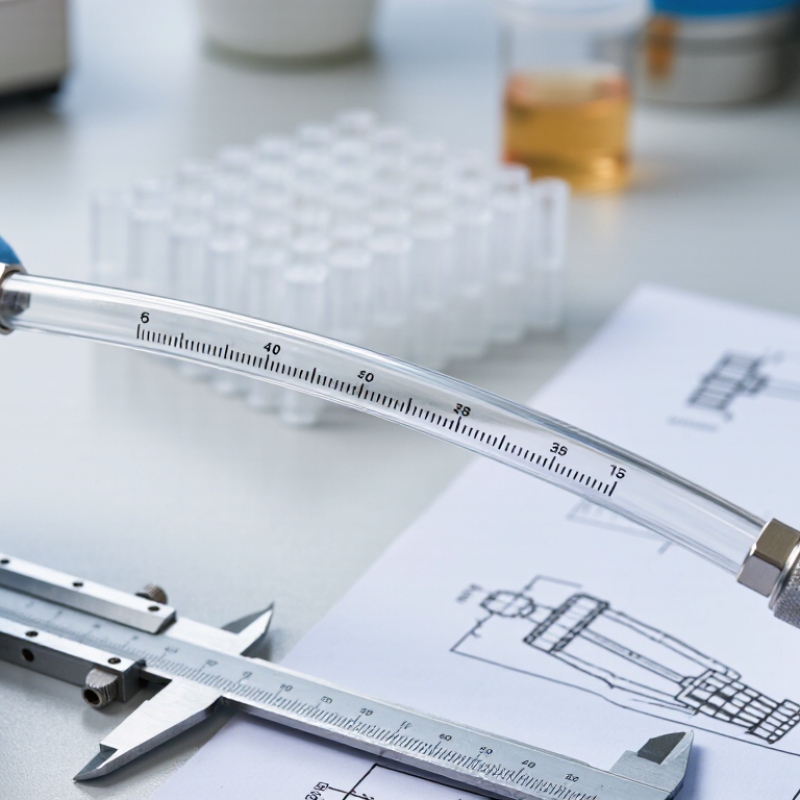
Medical Extrusion Prototyping helps medical device teams evaluate custom tubing before committing to full-scale production. It supports practical testing of dimensions, flexibility, flow performance, and connector fit. Engineers can examine a tube under real handling conditions, not only on a computer screen. A prototype may reveal uneven walls, excessive stiffness, or unexpected kinking. These details matter when tubing must guide fluids safely and consistently.

The process also supports informed material selection. Teams can compare medical-grade polymers according to transparency, hardness, chemical resistance, and sterilization compatibility. Small production runs make design changes more manageable. This can reduce wasted material and clarify manufacturing requirements. Experienced suppliers can assist with drawings, tolerances, tooling considerations, and inspection plans. Reliable documentation remains essential. Each sample should be linked to defined specifications and test results.

Still, prototyping is not a magic shortcut. A promising sample can fail later. Scale-up may change performance. That possibility deserves attention. Prototype results should therefore be reviewed with manufacturing, quality, and clinical engineering specialists. Testing should reflect the tubing’s intended environment, including pressure, temperature, bending, and connection stresses. No single prototype answers every question. However, Medical Extrusion Prototyping provides visible evidence for better decisions. It turns uncertain concepts into measurable designs. With careful review, teams can refine custom tubing before larger investments begin. Mistakes may still occur, but they become easier to identify, discuss, and correct.
Why Choose Medical Extrusion Prototyping for Custom Tubing?

What Medical Extrusion Prototyping Means for Custom Tubing

Medical extrusion prototyping means turning a tubing concept into a testable, measurable component before committing to full production. Engineers can adjust lumen size, wall thickness, hardness, radiopacity, and multilayer construction in small production runs. A catheter tube may look simple, yet a 0.1 mm change can affect flow, flexibility, or connection strength.

This matters as medical tubing demand grows. Grand View Research estimated the global medical tubing market at about USD 9 billion in 2023, with strong growth expected through 2030. However, market growth does not remove design risk. Prototype extrusion helps teams examine real samples under bending, pressure, sterilization, and repeated handling. It also supports material screening against ISO 10993 biological evaluation requirements.

Small details matter. A rough inner surface can increase resistance. An uneven wall can weaken a bend. Experienced extrusion engineers measure these issues with optical inspection, dimensional gauges, and burst testing. The process is practical, not perfect. One prototype may expose problems that computer models miss.

That is valuable evidence.

The FDA’s Quality Management System framework emphasizes documented design controls and verification. Prototype records can support those decisions when they include material lots, process settings, test methods, and failure observations. Still, a prototype is not clinical proof. It is a disciplined question made physical, helping teams refine custom tubing before cost, tooling, and regulatory risks become harder to reverse.

How the Custom Tubing Prototyping Process Works

Custom tubing prototyping begins with a clinical or engineering need, not a machine setting. The team defines inner diameter, wall thickness, length, flexibility, and connection points. They also review temperature, pressure, sterilization, and contact requirements. A designer converts these details into a workable tube profile. Small changes matter. A 0.2-millimeter shift can affect flow or fit.

During the design review, engineers build a CAD profile and select a medically appropriate polymer. They assess melt behavior, stiffness, transparency, and chemical resistance. The selected material is extruded through a precision die to create an initial tube. Operators record dimensions along the sample, checking for ovality, surface marks, and uneven walls. Hands-on inspection catches issues that drawings may hide. It is not glamorous, but it is useful.

Testing follows the prototype build. Samples may undergo pressure checks, flow testing, bend trials, dimensional inspection, and simulated sterilization exposure. Results are compared with the intended use and acceptance criteria. If the tube kinks near a connector, the team may adjust the profile, material, or cooling conditions. The first version is rarely perfect. That is normal. However, every revision should have a reason and documented evidence. A prototype that fits on the bench may still fail during handling, so practical user feedback remains essential before larger-scale production.

Why Choose Medical Extrusion Prototyping for Custom Tubing?

How the custom tubing prototyping process works: typical planning ranges for a single prototype iteration.

Medical extrusion prototyping typically moves from geometry definition and material selection to tooling, trial extrusion, inspection, and design refinement. The time ranges shown are practical planning estimates in business days and may vary with polymer choice, tubing geometry, tolerances, tooling complexity, and validation requirements.

Key Materials Used in Medical Extrusion Prototypes

Why Choose Medical Extrusion Prototyping for Custom Tubing?

Material selection shapes every medical tubing prototype.

Thermoplastic polyurethane offers flexibility, abrasion resistance, and reliable kink recovery.

Polyether block amide provides a soft feel with useful pressure support.

Polyether ether ketone suits demanding applications requiring stiffness, heat resistance, and chemical stability.

Polyvinyl chloride remains practical for transparent, cost-sensitive designs, but plasticizer selection requires careful review.

According to Grand View Research’s 2024 Medical Plastics Market report, the sector may grow at a 6.4% compound annual rate through 2030. That growth reflects rising demand for lighter, patient-focused devices.

It does not make every material suitable. The FDA’s 2023 guidance on ISO 10993-1 emphasizes biological evaluation within the device’s complete risk process.

Therefore, prototype tubing should consider additives, colorants, sterilization, and patient contact time.

Extrusion trials reveal details that drawings often miss.

A thin polyurethane tube may collapse during bending. A PEEK tube may need higher processing temperatures and tighter equipment control. Silicone can provide softness, yet it follows a different curing process from thermoplastics.

Small changes matter. Melt temperature, die design, cooling speed, and wall uniformity can alter performance.

Material selection is still an educated compromise. A prototype may pass dimensional checks but fail after sterilization.

Testing should include pressure, kink, tensile, leakage, and aging evaluations before design decisions become permanent.

Advantages of Prototyping for Medical Tube Design

Why Choose Medical Extrusion Prototyping for Custom Tubing?

Advantages of Prototyping for Medical Tube Design

Medical extrusion prototyping turns a drawing into a tube that engineers can handle, measure, and challenge. A prototype reveals practical issues before production tooling begins. Wall thickness may vary near bends. Connectors may fit too tightly. Small changes matter.

Design teams can compare materials, lumen sizes, hardness, and surface finishes using physical samples. They can test flow rates, kink resistance, tensile strength, and pressure performance under controlled conditions. A transparent prototype can also expose bubbles, narrowing, or uneven flow. These details are difficult to judge on a screen.

Prototyping supports closer cooperation between engineers, clinicians, and quality specialists. Each group can review the tube’s handling, cleaning process, packaging, and intended use. Documented measurements improve traceability and support evidence-based design decisions. Testing should reflect real conditions, including repeated bending, temperature changes, and sterilization exposure. No prototype removes every risk. That deserves attention.

An early sample can also expose manufacturing limits. The ideal drawing may be difficult to extrude consistently. That uncomfortable discovery is useful. Engineers can adjust tolerances, tooling features, or material choices before expensive scale-up work. Prototype results should be reviewed carefully, because one successful sample does not prove long-term reliability. Further testing may still be necessary for biocompatibility, shelf life, and regulatory documentation.

Why Choose Medical Extrusion Prototyping for Custom Tubing? - Advantages of Prototyping for Medical Tube Design

Medical extrusion prototyping allows engineers to evaluate tube geometry, material behavior, processing conditions, and functional performance before committing to full-scale production.

Design Dimension What a Prototype Can Validate Relevant Evaluation Data Development Advantage
Outer diameter and inner diameter Whether the extruded tube matches the intended dimensional profile and fits with connected components. Measured outer diameter, inner diameter, concentricity, ovality, and dimensional variation. Identifies fit and assembly issues before expensive production tooling and validation activities.
Wall thickness and profile uniformity Whether the wall remains sufficiently consistent along the tube and around its circumference. Wall-thickness measurements, cross-sectional inspection, and variation along the extrusion length. Helps balance flexibility, pressure resistance, flow performance, and material usage.
Single-lumen or multi-lumen geometry Whether each lumen is positioned correctly and remains open after sizing, cooling, and handling. Lumen diameter, lumen spacing, septum thickness, cross-sectional shape, and flow-path continuity. Reduces the risk of blocked passages, uneven flow, or interference between functional channels.
Material selection How a selected medical-grade thermoplastic behaves during extrusion and subsequent use. Hardness, flexibility, tensile behavior, elongation, chemical compatibility, and processing stability. Enables evidence-based material comparison before finalizing the tube specification.
Flexibility and bend performance How the tube responds to bending, routing, insertion, and repeated handling. Minimum bend behavior, kink resistance, recovery after bending, and changes in lumen patency. Supports ergonomic designs while helping preserve flow and mechanical integrity.
Surface finish and appearance Whether the tube surface is suitable for its intended contact, handling, bonding, or visual requirements. Surface uniformity, visible defects, clarity or opacity, color consistency, and particulate observations. Reveals processing or tooling issues that may affect usability, inspection, or downstream assembly.
Bonding and connection compatibility Whether the tubing can be joined reliably to hubs, connectors, fittings, or other tube sections. Bond strength, joint integrity, dimensional fit, leak performance, and compatibility with the selected joining method. Prevents late-stage incompatibility between the tube and the complete medical-device assembly.
Pressure and leak performance Whether the prototype withstands the intended pressure conditions without leakage or structural failure. Hydrostatic or pneumatic pressure response, burst behavior, leakage, and dimensional change under load. Provides early mechanical evidence for designs used in fluid delivery, drainage, or pressure-assisted systems.
Flow performance How the internal geometry affects fluid movement through the tube. Flow rate, pressure drop, fluid compatibility, and changes caused by bending or connector attachment. Helps optimize lumen size and tube configuration for the intended clinical function.
Sterilization and post-processing suitability Whether the selected material and geometry remain stable after the intended sterilization or post-processing cycle. Dimensional change, discoloration, embrittlement, flexibility change, and functional performance after processing. Exposes material or design risks before formal verification and production-scale qualification.
Design iteration and manufacturability Whether the geometry can be produced consistently using an extrusion process and adjusted efficiently when needed. Process stability, dimensional repeatability, die or tooling adjustments, scrap observations, and inspection results. Creates a practical feedback loop between design requirements, tooling, processing, and final tube performance.
Note: The specific dimensional limits, test methods, acceptance criteria, material requirements, and sterilization conditions should be defined for the intended application and verified against applicable medical-device standards and regulatory requirements.

Quality, Compliance, and Production Considerations

Why Choose Medical Extrusion Prototyping for Custom Tubing?

Quality and compliance begin with the material, tooling, and process—not the final inspection alone. Medical extrusion prototyping lets engineers test wall thickness, lumen consistency, flexibility, and surface finish before production volumes increase. Small trial runs reveal issues such as ovality, uneven cooling, or difficult insertion. These details matter when tubing must guide fluids, protect delicate components, or fit inside a narrow device. A controlled prototype also supports documented design decisions, supplier discussions, and risk-based testing. Compliance is not automatic. Material selection, biocompatibility evidence, cleanliness controls, and traceability must match the device’s intended use and applicable requirements.

Tips: Define critical dimensions early. Request cross-sectional measurements, visual criteria, and lot records. Test tubing after sterilization if sterilization may affect stiffness or clarity. Keep samples from each trial. They can explain later changes. Do not rely on appearance alone.

Production planning should enter the conversation early. A prototype may run smoothly at low speed but behave differently during continuous extrusion. Engineers should review tolerances, scrap rates, inspection methods, packaging, and scale-up timing. A design that is technically elegant may be expensive to stabilize. That is worth admitting. Sometimes a slightly thicker wall, simpler geometry, or wider tolerance creates a more reliable product. Experienced teams compare prototype data with real manufacturing limits, then revise the design before tooling and validation costs grow. Documentation should remain clear enough for quality reviewers, operators, and future engineers to understand.

FAQS

What is medical extrusion prototyping?

It converts a tubing design into a measurable physical sample before full production. Engineers can adjust lumen size, wall thickness, hardness, and layers. The sample makes design problems visible.

Why is prototyping useful for custom medical tubing?

A prototype can reveal flow resistance, weak bends, poor connections, and uneven walls. A 0.1 mm change may affect flexibility or pressure performance. Small details matter.

Which properties can engineers evaluate?

Teams can assess lumen consistency, surface finish, flexibility, kink resistance, tensile strength, and pressure performance. Transparent tubing may reveal bubbles or narrowed passages. Screens can miss these defects.

What testing may be performed on prototype tubing?

Testing may include dimensional inspection, flow measurement, burst testing, bending cycles, and connection checks. Samples can also face temperature changes and sterilization exposure. Testing should reflect intended use.

Can a prototype prove that tubing is clinically safe?

No. A prototype supports design learning, not clinical proof. Biocompatibility, cleanliness, shelf life, and other evidence may require separate evaluation. One successful sample proves very little.

How should materials be evaluated during prototyping?

Teams can compare hardness, clarity, flexibility, and processing behavior across candidate materials. Biological evaluation requirements should match the intended device use. Material selection is not automatic.

What information should prototype records include?

Records should identify material lots, process settings, dimensions, test methods, and failure observations. Keep samples from each trial. They may explain later changes.

How does prototyping support production planning?

A low-speed trial may run smoothly but fail during continuous extrusion. Teams should review tolerances, scrap rates, tooling, inspection, packaging, and scale-up timing. Reality can be less elegant.

What common problems can prototyping expose?

It may show ovality, uneven cooling, rough inner surfaces, or difficult insertion. A drawing can look perfect while the tube performs poorly. That uncomfortable finding is useful.

Conclusion

Medical Extrusion Prototyping provides a practical way to develop custom medical tubing before full-scale production. It involves translating design requirements into trial tube structures, selecting suitable dimensions, wall thicknesses, flexibility levels, and performance characteristics. The process typically includes design review, material selection, tooling or die preparation, prototype extrusion, dimensional inspection, and functional testing. Common materials may include medical-grade thermoplastics chosen for their strength, flexibility, chemical resistance, transparency, or sterilization compatibility.

Prototyping allows engineers to identify design issues early, refine fluid flow and handling performance, and reduce the risk of costly production changes. It also supports the evaluation of connections, tolerances, kink resistance, and other application-specific requirements. Throughout development, manufacturers should maintain clear documentation, traceability, process controls, and testing procedures. By combining careful material selection with controlled extrusion and quality verification, medical tubing prototypes can provide a reliable foundation for compliant, scalable, and consistently manufacturable tube designs.

Ethan

Ethan

Ethan is a dedicated marketing professional with a deep expertise in his company's product offerings. He possesses an impressive understanding of market trends and consumer behavior, allowing him to craft compelling narratives that resonate with target audiences. With a passion for sharing......